Quick answer
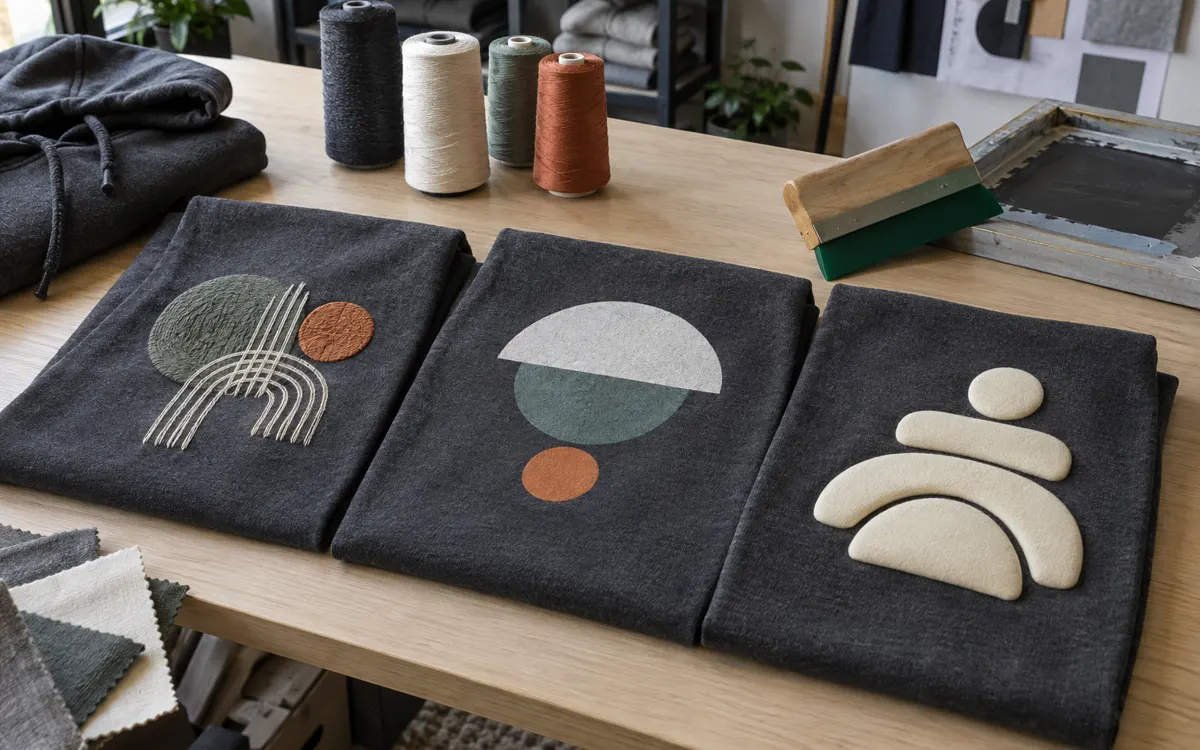
Use embroidery for small chest logos and a premium, durable finish; screen printing for bold graphics and larger runs at a lower cost per piece; puff print for a raised 3D effect on simple shapes; and DTF transfers for full-colour artwork in small quantities. No method suits every design: logo size, colour count, quantity and fabric decide. SenLin supports logos on the front chest or back of standard styles from 100 pieces and reviews each file against the fabric before sampling.
The question behind this guide
Is embroidery or screen printing better for custom hoodies?
Search suggestions included “screen printing vs embroidery cost”, “is screen printing or embroidery cheaper”, “dtf vs screen printing vs embroidery”, “puff print hoodie” and “how to wash puff print hoodie”. Buyers ask about cost, durability and how each method looks on fleece.
Questions were chosen from Google search suggestions checked on 23 September 2026. SenLin’s minimums, sample periods, production periods, sizes and fabric ranges come from its owner-confirmed order terms; technical and regulatory points link to the source they rely on. This is buyer guidance, not legal, customs or testing advice for a specific order.
Key takeaways
- Choose the method from the artwork, not from habit.
- Small chest logos suit embroidery; large graphics suit printing.
- Puff print needs bold shapes and a wash test.
- Approve a decorated sample on the actual fabric and colour.
Decoration methods compared
SenLin’s guide to DTG, DTF and screen printing covers print methods in more depth; this guide adds embroidery and puff print, the most common alternatives on hoodies.
| Method | Best for | Watch-outs |
|---|---|---|
| Embroidery | Small chest logos, simple marks and a premium finish | Cost follows stitch count; backing can feel stiff inside |
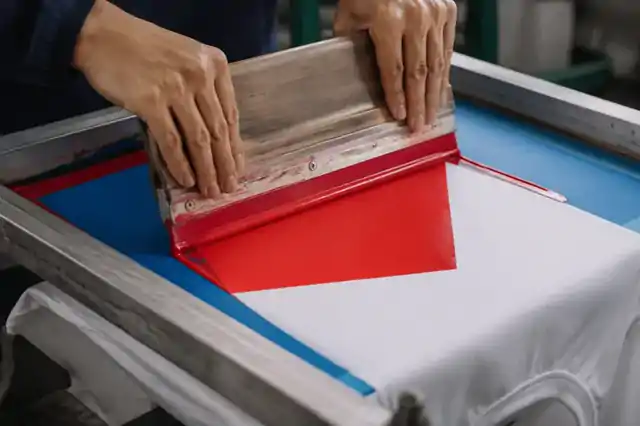
| Screen printing | Bold graphics, few colours and larger runs | Set-up for each colour; fine gradients need special techniques |
| Puff print | A raised 3D effect on simple, bold shapes | Fine lines fill in; avoid ironing; wash-test first |
| DTF transfer | Full-colour artwork, small runs and many designs | Large solid areas feel heavier and less breathable |
| Patch or appliqué | Crests, badges and textured identity marks | Adds a sewing step; check edges and corners |
How decoration cost behaves with quantity
Screen printing carries a set-up for each colour, so its cost per piece falls as quantity rises and rises with the number of colours. Embroidery cost follows stitch count—broadly the logo’s size and density—more than quantity. DTF has little set-up per design, which suits many small designs, while its cost per piece depends on the transfer area.
Ask for decoration to be priced as its own line, so you can compare methods on the same garment and quantity.
Choose by artwork
| Artwork | Starting method | Why |
|---|---|---|
| Small chest logo with simple shapes | Embroidery | Durable, textured and premium at small sizes |
| Large back graphic in a few flat colours | Screen printing | Efficient per piece at volume and soft with the right ink |
| Photographic or many-colour artwork | DTF transfer | Reproduces colour detail without per-colour set-up |
| Bold wordmark wanted in 3D | Puff print | A raised effect, if the shapes stay simple |
| Team crest or badge | Patch or embroidery | A textured, repeatable identity mark |
Fabric and placement checks
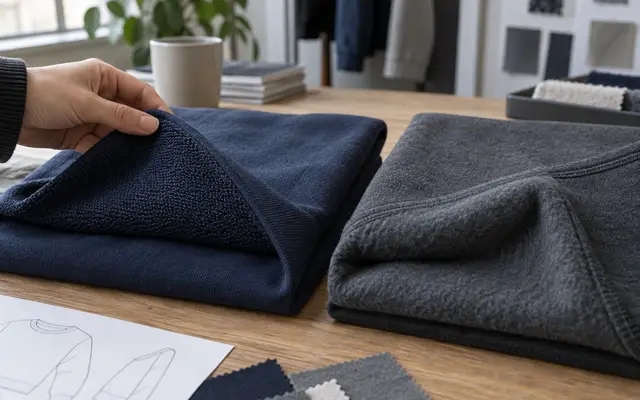
SenLin’s confirmed placements are the front chest, back or both on core performance styles, and the front chest or back on polos and fleece styles.
- Decorate the smooth face, then check the inside of the sample for backing or transfer comfort.
- Keep logos clear of seams, pocket openings and the hood join.
- Measure placement from a fixed point, such as the collar seam or centre front.
- On polyester, ask how dye migration is controlled for light inks on dark fabric.
- On stretch performance fabric, confirm the print stretches with the garment.
Puff print: what to know before ordering
Puff print uses a plastisol-based ink with an expanding additive that rises when it is cured with heat, lifting the design off the fabric. It suits bold letters and simple shapes on cotton-rich fleece. Small counters and fine lines close up as the ink rises, so the artwork usually needs thicker strokes than a flat print.
Heat from an iron or a hot dryer can flatten the effect. State the care instruction on the label and wash-test the decorated sample before approving bulk.
Durability is agreed, not assumed
Durability depends on the method, the ink or thread, curing or application, the fabric and the care conditions. Agree how the decorated sample will be washed and judged—for example the number of cycles and what counts as cracking, peeling or fading—before you approve it, and keep the approved sample as the bulk reference.
What to send with your artwork
- Vector files: EPS, SVG or PDF with outlined fonts.
- Pantone or physical colour references.
- The finished size in centimetres for each placement.
- Placement measured from a fixed point on the garment.
- The garment colour for each artwork version.
- The quantity for each design, which affects the method.
Continue your buyer research
Connect this decision to the relevant product, factory process and frequently asked questions before requesting a quotation.
Frequently asked questions
Is screen printing cheaper than embroidery?
Usually for larger runs of a simple design, because the screen set-up is spread across the quantity. For a small chest logo on a small order, embroidery can be competitive. Compare both as separate decoration lines on the same garment.
Can puff print be washed?
Yes, with care: wash inside out, avoid ironing the print and avoid high dryer heat. Agree a wash test for the decorated sample before bulk approval.
Does embroidery work on polyester performance fabric?
It can, with suitable backing, needle and stitch density to avoid puckering on stretch fabric. Approve a stitched sample on the exact fabric before bulk.
Sources and evidence notes
- Commerce platform guidanceShopify: questions to ask a private-label manufacturer