Quick answer
Moisture wicking describes liquid movement through or along a textile; it does not automatically prove fast drying, air permeability or comfort. Fiber surface, yarn, knit structure and finish all contribute. Define the wearer scenario and request the method, result and tested sample behind each claim.
The question behind this guide
What does moisture-wicking really mean?
Founder and sourcing discussions repeatedly return to buyers using wicking, quick-dry and breathable as if they were one measurable property. These posts are used to identify buyer uncertainty, not to establish a technical rule or market statistic.
Read the community discussionWicking questions from buyer communities were matched with the properties textile tests can actually measure. The evidence ranking is a buying aid for deciding what to ask for, not a review of any laboratory or report.
Key takeaways
- Separate liquid transport, drying and air permeability.
- A finish may need durability checks after care.
- Test the proposed color and fabric construction.
- Avoid unqualified performance promises.
Rank the evidence behind a wicking claim
The ranking evaluates relevance to the order, not the prestige of a document.
| Rank | Evidence | Confidence for this order |
|---|---|---|
| 1 | Report for proposed bulk fabric and method | Most relevant |
| 2 | Tested development swatch with traceable identity | Useful before bulk |
| 3 | Supplier data for a related construction | Direction only |
| 4 | Fiber reputation or hand demonstration | Not a specification |
What buyers often misunderstand about moisture management
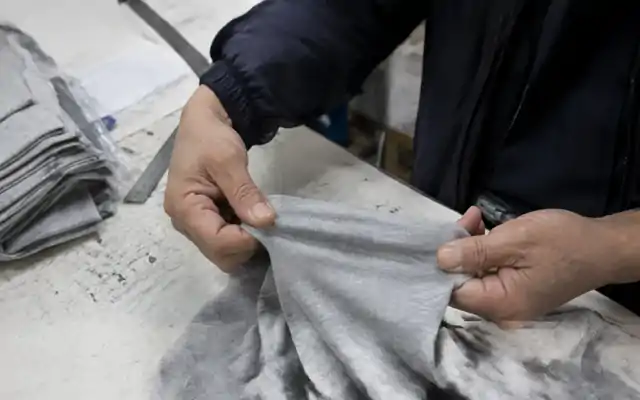
A droplet disappearing into fabric may show spreading, but it does not by itself quantify drying, sweat transport across the garment or wearer comfort.
Wicking depends on the fibre surface, the yarn and the knit as much as on any finish, and a hydrophilic finish can weaken with washing. Ask whether the tested fabric was finished, how many washes it had seen, and which side faced the skin.
What to put in the development brief
Write the claim you want to make, then the scenario, for example “dries faster than our current cotton tee during indoor training”. A claim with a comparison and a setting tells everyone which test and which control fabric to use.
- Claim wording and intended use.
- Material identity and finish.
- Test method, conditioning and acceptance level.
- Care cycles before re-test.
- Critical zones such as back, underarm and waistband.
Sample and evidence plan
Ask whether the report measures absorption, spreading, one-way transport, drying or another property. The claim on the product page should not exceed what the evidence supports.
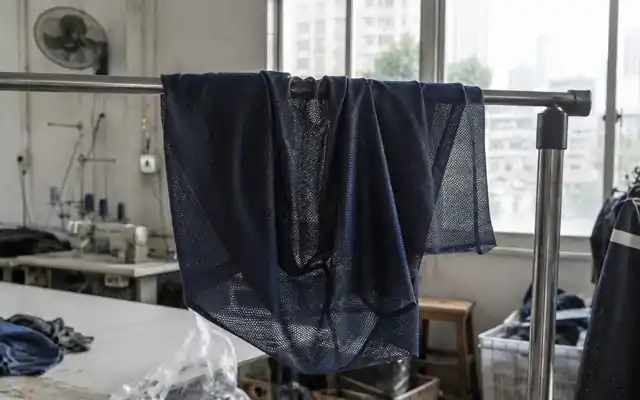
Ask for results on the bulk fabric in the shade you will order, both before and after the agreed washes. Dark and light shades of the same fabric can behave differently once they are dyed and finished.
Factory confirmation checklist
Moisture wicking is a confirmed property of SenLin’s ready-stock performance fabrics; a numeric target or named test method is agreed per order. Standard styles start at 100+ pieces, and custom fabrics follow the 300–500+ route.
| Checkpoint | Question to ask | Record to retain |
|---|---|---|
| Claim | Which exact property is promised? | Approved marketing wording |
| Method | What was tested and under which method? | Report with sample identity |
| Durability | Does performance remain after care? | Post-care result |
Decision and risk note
Use the narrowest truthful claim that helps the buyer. A clear measured property is stronger than stacking several undefined performance words.
In many markets a performance claim must be supported before it is printed. Keep the report, the tested sample identity and the wash count with the claim wording, and avoid stacking “wicking”, “quick-dry” and “cooling” unless each has its own evidence.
Continue your buyer research
Connect this decision to the relevant product, factory process and frequently asked questions before requesting a quotation.
Frequently asked questions
Is wicking the same as quick drying?
No. Liquid movement and evaporation are related but distinct behaviors.
Is polyester always moisture-wicking?
No. Fiber and fabric engineering or finishing affect performance.
Should finished garments be tested?
Fabric tests can guide selection; garment construction and zones may justify additional review.
Sources and evidence notes
Community sources document recurring buyer questions and experience; they are not treated as universal technical standards. Official guidance is identified separately.
- Community discussionReddit: activewear factory, fabric and lead-time questions
- Community discussionReddit: small-brand manufacturing workflow
- Official US ruleFTC: Care Labeling Rule
- Standard ownerOEKO-TEX STANDARD 100 factsheet