Quick answer
Before approving water-repellent apparel for EU sale, ask for the finish identity, component and lot traceability, a declaration covering the applicable chemical requirements, and laboratory evidence with an agreed scope. The PFHxA clothing restriction applies from 10 October 2026, but a water-beading photograph, a “C6” description or a generic “PFAS-free” statement cannot establish compliance.
The question behind this guide
What evidence should an EU apparel buyer request for a water-repellent finish?
Germany’s Federal Institute for Risk Assessment identifies 10 October 2026 as the PFHxA deadline for clothing textiles and footwear for the general public. Buyers approving finishes now need to distinguish the chemistry decision from the visible water-repellent effect.
This is an order-preparation checklist based on official chemical-risk guidance. It is not a laboratory protocol, a legal opinion or evidence that a SenLin product has passed a chemical assessment.
Key takeaways
- Define the destination and intended product use before selecting the requirement.
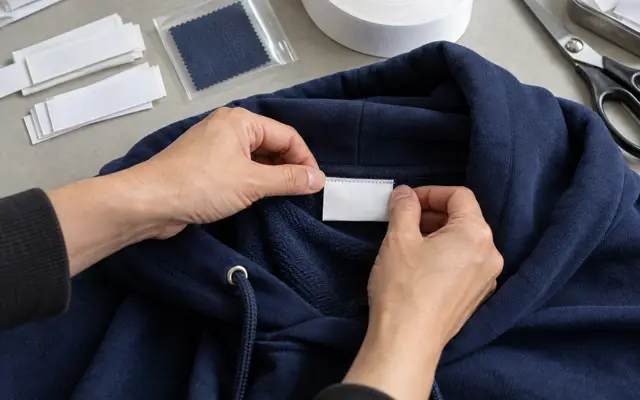
- Identify the finish and each relevant component, including membranes and trims.
- Agree laboratory scope and reporting limits before treating a report as approval.
- Keep chemical compliance separate from water-repellency performance.
Which change applies to an ordinary apparel order?
Commission Regulation (EU) 2024/2462 added PFHxA, its salts and related substances to REACH Annex XVII entry 79. From 10 October 2026, paragraph 1 restricts their placing on the market or use at the specified concentrations in clothing and related accessories for the general public. PFHxA is part of the wider PFAS family; this is not a universal ban on every PFAS use.
For that entry, the limits are 25 ppb for the sum of PFHxA and its salts and 1,000 ppb for the sum of PFHxA-related substances, measured in homogeneous material; concentrations at or above either limit are restricted. Paragraph 7 provides an exception for articles and mixtures placed on the market before 10 October 2026. Ask the EU importer or its compliance adviser to confirm the order’s scope and evidence; specialist protective, medical and construction uses need separate assessment.
Does “C6” or “PFAS-free” settle the question?
No. The BfR explains that C6 finishing technology can leave PFHxA residues. Treat “C6” as a description to investigate, rather than a compliance conclusion. For a “PFAS-free” statement, request the supplier’s precise definition, substance coverage, evidence and material reference.
Also ask about other components. A declaration for the face-fabric finish does not automatically address a membrane, print, coating, sewing trim or later treatment. Keep every declaration attached to the component and lot it actually covers.
What belongs in the evidence request?
Use the table as a purchasing worksheet. It is not an exhaustive statutory document list. The importer and laboratory should resolve the exact legal and analytical scope before the supplier is asked to satisfy it.
| Request | Why it matters | What needs clarification |
|---|---|---|
| Product and destination | Sets the assessment scope | Ordinary apparel, sales countries and intended use |
| Finish and component identities | Connects declarations to the build | Fabric, finish reference, membrane, print and trims |
| Material and lot references | Links documents to the order | Mill, colour, finish version and supplied lot |
| Chemical requirement | Defines the actual question | Applicable law, restricted groups and buyer requirements |
| Laboratory brief and report | Shows what was assessed | Analytes, method, reporting limits, sample and result |
| Change control | Keeps approval relevant | Who must review a changed finish, mill or component |
What should the laboratory confirm before testing?
Send the product description, component breakdown and relevant requirement to a qualified laboratory. Ask it to confirm which substances or substance groups the work will address, suitable sample preparation, the analytical method and reporting limits. Ask how its report will support the specific requirement, including any limitations.
Read “not detected” together with the reporting limit and sample identity. It is not a statement that every possible PFAS is absent. Ask the laboratory how any screening result relates to the targeted legal assessment; do not assume differently scoped results are interchangeable.
- Name the exact sample and components submitted.
- Keep the report and declaration linked to the same specification.
- Resolve exclusions and inconclusive results before approval.
- Agree what must be reassessed if the material or treatment changes.
Can the water-repellent effect still be approved separately?
Yes. A finish’s chemical assessment and its water-repellent performance answer different purchasing questions. BfR notes that fluorochemical-free water-repellent technologies exist, while their oil- and dirt-repellent properties differ. Do not promise that a substitution preserves every original function.
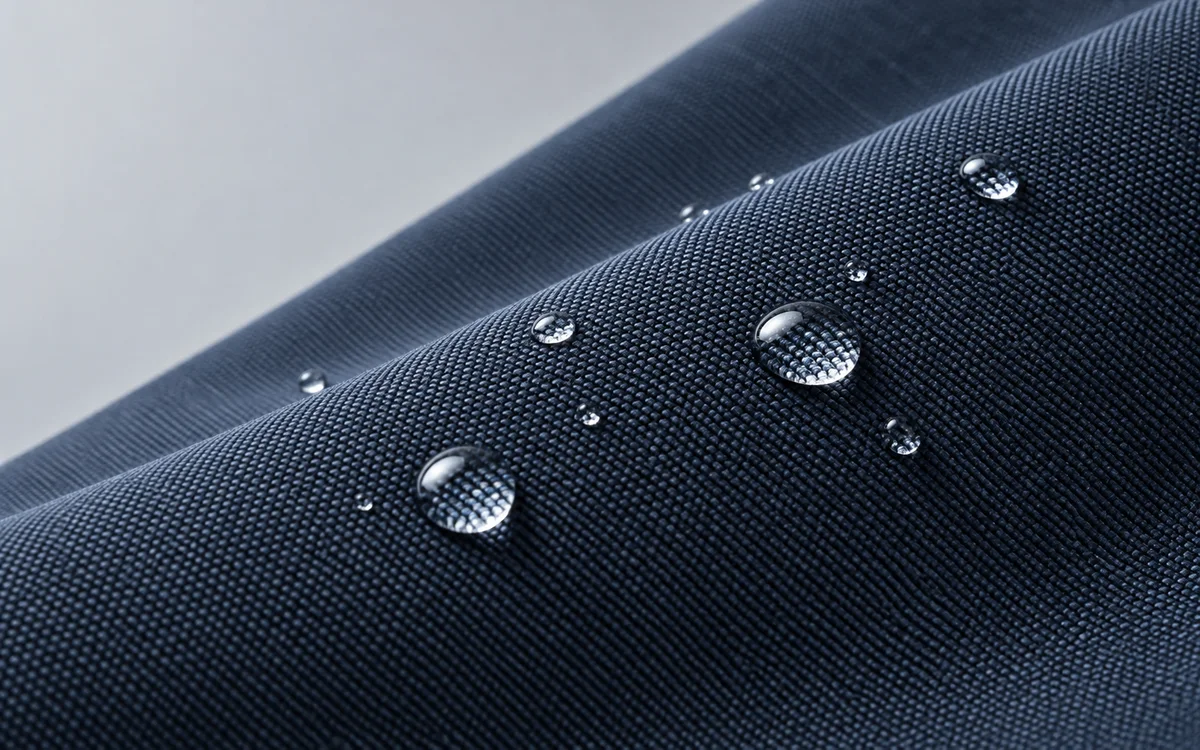
Define the effect the garment actually needs and the care conditions it must withstand. Review the proposed treatment on the intended fabric, seams and decoration. A water-beading image cannot identify the finish chemistry, and it cannot establish whole-garment waterproofness or durability after washing.
What should happen before the purchase order is approved?
Close the material, evidence and commercial questions together. Confirm who reviews compliance documents, which version is approved and whether any component substitution needs written approval. If the documents do not cover the proposed build, keep the relevant decision open rather than treating a sample’s appearance as clearance.
SenLin does not claim a PFHxA test result, PFAS-free range or approved alternative finish in this guide. Any requested treatment, evidence, testing cost and commercial effect need confirmation for the project. Start with the intended product and destination so the relevant questions can be sent to the material supplier.
Preparing an EU apparel brief? Send SenLin the product, destination, quantity plan, required function and any chemical specification you already use. We can identify the material and evidence questions that need confirmation before quotation.
Continue your buyer research
Connect this decision to the relevant product, factory process and frequently asked questions before requesting a quotation.
Frequently asked questions
Does the October 2026 PFHxA restriction ban all PFAS everywhere?
No. It is a specific restriction with defined substances, product uses and conditions. Wider PFAS measures and other applicable chemical rules need separate checking.
Is a C6 finish automatically acceptable for EU clothing?
No. C6 terminology does not establish compliance, and BfR notes that this technology can leave PFHxA residues. Request evidence for the actual treatment and material.
Does a water-beading photograph prove a compliant finish?
No. It shows an appearance at one moment. It does not identify the chemistry, establish restricted-substance results or prove performance after care.
Can one fabric report cover every colour and trim?
Do not assume that it can. Ask the laboratory and importer to confirm the justified scope for the materials, colours, components and lots in your order.
Can SenLin promise a PFAS-free water-repellent garment?
No blanket claim is made here. The proposed finish, component evidence, assessment scope and project terms must be confirmed before any product promise.
Sources and evidence notes
- German Federal Institute for Risk AssessmentBfR: PFAS in outdoor clothing and the PFHxA restriction
- EU legal textCommission Regulation (EU) 2024/2462: legal scope and conditions
- Official legal text, Italian versionRegulation (EU) 2024/2462: Official Journal text hosted by Italy’s environment ministry