Quick answer
Start with blanks—ready-stock hoodies, sweatpants or tees branded with your logo, labels and packaging—when you need a lower minimum and a faster launch; move to cut-and-sew when the garment’s fabric, fit or construction is what sets your brand apart. At SenLin, the blank route starts at 100 pieces with mixed sizes and 15 working days of production; cut-and-sew custom development starts at 300–500+ pieces, takes 20–25 working days and needs an approved sample first.
The question behind this guide
Should a new hoodie brand start with blanks or cut-and-sew?
Search suggestions included “how to start a hoodie brand”, “how much does it cost to start a hoodie brand”, “private label hoodies”, “white label hoodies wholesale” and “blank hoodies wholesale”. The underlying question is how much to commit before the first sale.
Questions were chosen from Google search suggestions checked on 23 September 2026. SenLin’s minimums, sample periods, production periods, sizes and fabric ranges come from its owner-confirmed order terms; technical and regulatory points link to the source they rely on. This is buyer guidance, not legal, customs or testing advice for a specific order.
Key takeaways
- Blanks lower the minimum and the development risk.
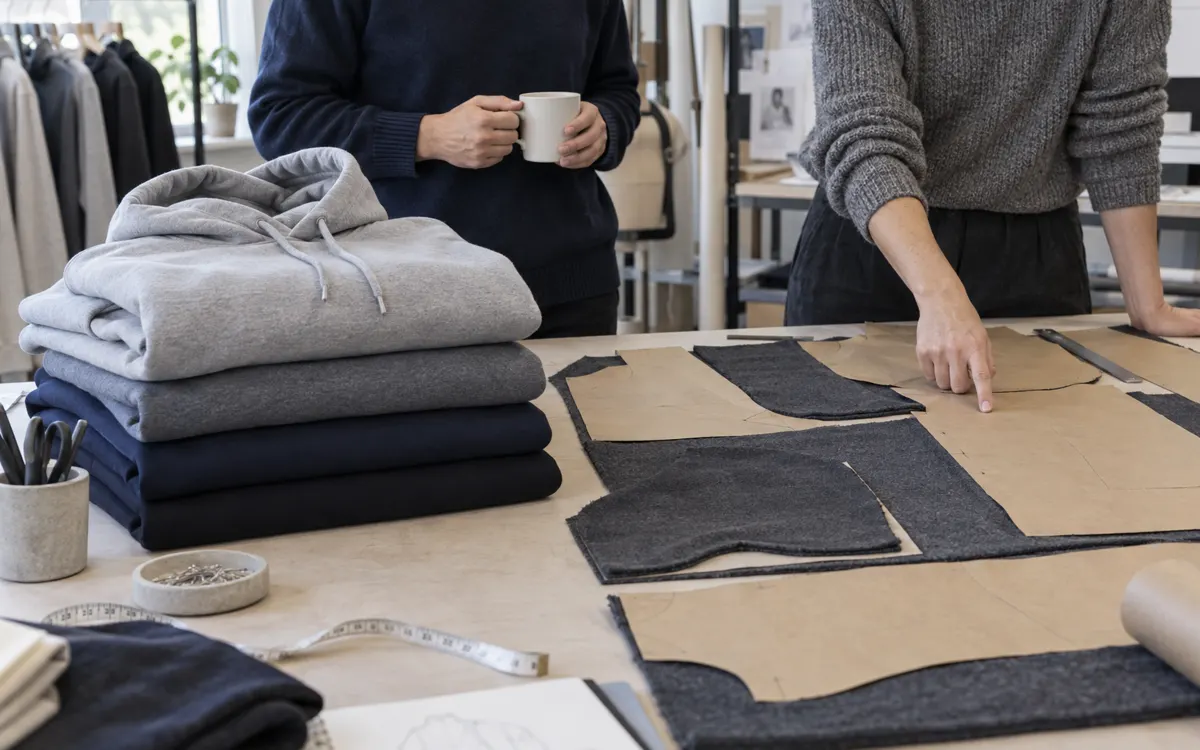
- Cut-and-sew makes the garment itself the brand asset.
- Labels, packaging and decoration can make blanks feel like your own.
- A proven blank style can later move to a custom version.
The two routes compared
| Question | Branded blanks (standard styles) | Cut-and-sew (custom development) |
|---|---|---|
| What you control | Logo, labels, packaging and colour from stock | Fabric, colour, pattern, fit, construction and trims |
| SenLin minimum | 100+ pieces with mixed sizes | 300–500+ pieces, confirmed by style |
| Sample | Standard sample in 3–4 days | Custom sample in 3–7 days; may need more than one round |
| Production | 15 working days | 20–25 working days |
| Differentiation | Carried by artwork, labels and packaging | The garment itself is unique |
| Exposure | Lower stock and development commitment | Higher minimum and development cost |
When blanks are the right start
SenLin’s ready-stock fleece—hoodies, sweatpants, hoodie sets and fleece layers at 200–450 g/m² in cotton or polyester—comes in relaxed-fit solid colours, sizes S–5XL, supplied without hangtags, so your own labels and packaging can be added as quoted options.
- You are testing a design, an audience or a sales channel.
- Your budget covers one or two styles at the minimum.
- You need stock for an event, a team or a near launch date.
- Your brand identity is mainly graphic.
When to move to cut-and-sew
- A specific fit, such as oversized or boxy, is central to the product.
- You need a fabric, weight or colour that stock styles do not offer.
- Construction details—panels, pockets or hood shape—define the brand.
- Sales of a blank style justify a larger, exclusive run.
Make blanks feel like your brand
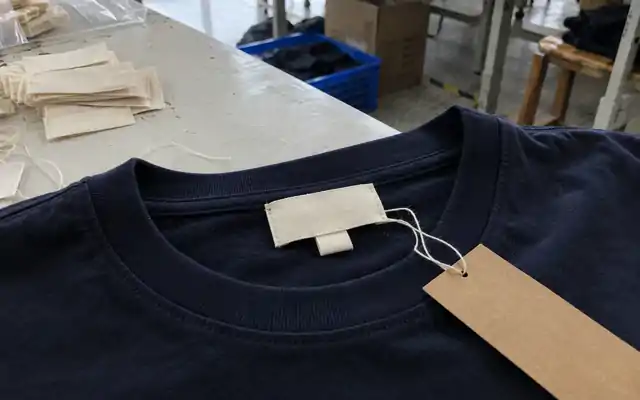
- Custom neck or care labels and hangtags, quoted separately.
- A decoration method chosen for the artwork: embroidery, screen print, puff print or DTF.
- Custom individual packaging and cartons, available for all SenLin products.
- Consistent colour choices across hoodies, sweatpants and tees.
A staged launch plan
| Stage | What to do | SenLin reference |
|---|---|---|
| 1. Test | Launch one or two blank styles with your logo | 100+ pieces; 15 working days |
| 2. Brand | Add custom labels, hangtags and packaging | Quoted separately for ready-stock fleece |
| 3. Develop | Move the best seller to a custom fabric or fit | 300–500+ pieces; 20–25 working days |
| 4. Repeat | Reorder from the approved sample and specification | Reconfirm fabric, colour and sizes each time |
Common first-run mistakes
Each of these is cheaper to fix in the brief than in the carton. A short written specification that covers colours, sizes, artwork, labels and packaging lets the quotation, the sample and the bulk order all refer to the same decisions.
- Spreading the minimum across too many colours before any of them has sold.
- Guessing the size split instead of basing it on the audience you sell to.
- Approving artwork on a screen rather than on a decorated sample.
- Leaving labels and packaging until after sampling, which delays the order.
- Budgeting for the garments but not for freight, duties and returns.
Decide these before the first order
Whichever route you choose, confirm the quantity by colour and size, the logo method and placement, the label and packaging specification, the destination and trade term, and who owns the patterns and artwork. For hoodie sets, confirm whether the quantity counts complete sets or individual garments.
Continue your buyer research
Connect this decision to the relevant product, factory process and frequently asked questions before requesting a quotation.
Frequently asked questions
What is the difference between blanks and private label?
Blanks, or white label garments, are ready-made styles that any seller can brand. Private label means production for one brand to its own specification and branding, from branded blanks to fully custom cut-and-sew styles.
Can I put my own labels on blank hoodies?
Yes, as a separately quoted option at SenLin. Ready-stock fleece is supplied without hangtags, and custom neck labels, care labels, hangtags and packaging can be specified for your order.
What is the minimum for cut-and-sew hoodies at SenLin?
Custom development starts at 300–500+ pieces depending on the style, with custom samples in 3–7 days and production in 20–25 working days.
Sources and evidence notes
- Commerce platform guidanceShopify: questions to ask a private-label manufacturer
- Official US guidanceFTC: textile fiber, origin and business identity labeling