Quick answer
A side seam that rotates towards the front or back after washing may indicate garment spirality, also called torque. This concerns rotation between garment panels; it is a different observation from a shorter body length or a broken seam. Compare the same garment before and after an agreed laundering procedure, identify its material and construction, and ask a laboratory to confirm the appropriate assessment. A photograph alone cannot establish the cause or a pass result.
The question behind this guide
What should a buyer do when a T-shirt comes out of the wash twisted?
Product longevity was part of the October 2026 OIA Catalyst programme. A useful procurement response is to check whether garment appearance stays acceptable after care, alongside fit and strength. The programme is context for the buyer question, not evidence that seam-twist complaints have increased.
ISO and BSI public descriptions distinguish garment spirality from other changes. This guide explains the purchasing decision and evidence to collect; it does not reproduce the full test procedure or report a SenLin test result.
Key takeaways
- Record rotation separately from length and width change.
- Keep before-and-after evidence for the same garment.
- Select a garment assessment when the question concerns assembled panels.
- Agree the method and acceptance decision before bulk approval.
Identify rotation before naming a defect
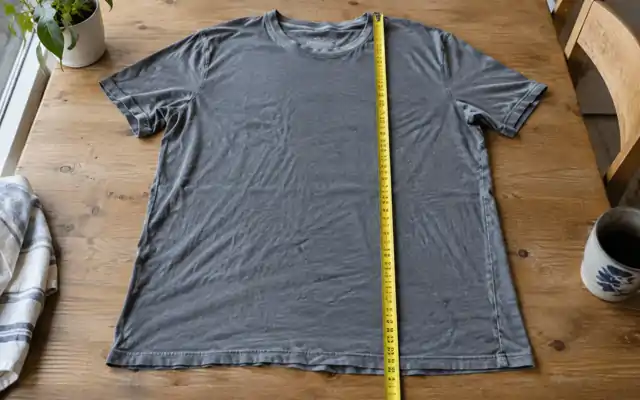
Lay the garment out consistently and look at the side seams, hem and panel alignment. If a side seam moves around the body after care, describe where it moves and whether both sides behave alike. Avoid stretching or pressing the garment into a preferred shape before documenting it.
ISO describes garment spirality as rotation between panels associated with stresses released during laundering. That gives the observation a name; it does not diagnose the particular yarn, fabric finish or sewing operation responsible in your order.
Separate three different wash-review questions
These problems can occur together, but one measurement does not answer all three questions. A garment can retain its overall length and still look twisted. A strong seam can remain intact while its position rotates.
Use the existing dimensional-stability guide for length and width limits, and the seam-strength guide for opening or breakage. Keep spirality as a separately identified appearance question rather than turning this into one general wash-pass statement.
| Observation | Question to investigate | Evidence to keep |
|---|---|---|
| Side seam rotates around the body | Has garment spirality changed after laundering? | Panel and seam alignment before and after care |
| Body gets shorter or wider | What dimensional change occurred at the agreed measuring points? | Length and width measurements using the same method |
| Stitching breaks or seam opens | Does seam construction withstand the required use? | Seam location, fabric condition and failure details |
Choose the assessment for the item being approved
BSI’s public description of ISO 16322-3 identifies procedures for measuring garment spirality after domestic laundering. The garment scope matters when the concern is how assembled panels rotate. A fabric-level report answers a different scope question and should not silently replace the garment assessment.
Ask the laboratory to confirm the method, edition and applicable procedure for the product. AATCC also lists TM207 for seam twist in garments and TM179 for skew change in fabrics. Their titles do not establish interchangeable results. Request the actual method used on the report.
Make the before-and-after record repeatable
Identify the style, size, colour, material reference and sample or lot. Record whether the garment was already washed or finished before the first observation. Keep images of the same item, orientation and relevant seams before and after the agreed care sequence.
The laboratory brief should identify washing and drying conditions, the number of cycles and how results will be reported. Let the selected procedure govern preparation and measurement; do not invent a percentage from a casual photograph. A development photo record supports discussion but is not a substitute for the agreed assessment.
- Use one identifier per garment so records cannot be mixed.
- Show both side seams and the hem in the evidence.
- Keep laundering and drying details beside the observations.
- Record any pressing or other treatment that affects appearance.
Investigate the cause with the mill and sewing team
Send the evidence to the supplier and ask which material and assembly records need review. Compare whether the concern appears in the fabric, the assembled garment or only after care. Ask about material or construction changes between the submitted sample and the affected lot.
Do not prescribe a correction from the symptom alone. A proposed adjustment to fabric preparation, finishing, cutting or assembly needs a new review on the revised garment. Changing a seam position before care can hide a visual symptom without establishing that the underlying behaviour is controlled.
Set an acceptance decision without inventing a universal limit
Agree the assessment method and acceptance requirement for the intended product before approving bulk. Tie any approval to the tested material and construction. If a buyer accepts a specific deviation, identify the affected lot and record the concession rather than silently changing the standard for later orders.
This guide covers ordinary apparel appearance review. It supplies no universal spirality limit, laboratory accreditation claim or guarantee of a particular fabric correction. SenLin testing scope, external laboratory arrangements and any project requirement must be confirmed in writing.
Reviewing a training top before bulk? Share the garment reference, care plan and appearance requirements so SenLin can discuss a suitable approval brief. Any testing and acceptance conditions need project confirmation.
| Decision gate | Question |
|---|---|
| Scope | Is the assessment for fabric or the complete garment? |
| Procedure | Are care conditions and reporting method agreed? |
| Evidence | Can the result be traced to the approved material and construction? |
| Release | Is approval, rejection or a limited concession recorded? |
Continue your buyer research
Connect this decision to the relevant product, factory process and frequently asked questions before requesting a quotation.
Frequently asked questions
Is a twisting side seam always a sewing fault?
No. Rotation can involve the behaviour of the textile as well as the assembled garment. Document it and investigate the actual material and construction before assigning a cause.
Is spirality the same as shrinkage?
No. Spirality concerns rotation or twist. Shrinkage concerns dimensional change; they need separately identified observations and acceptance requirements.
Can a seam-strength pass prove that a T-shirt will not twist?
No. A seam can remain intact while its position changes. Match the assessment to the appearance question you need answered.
Can I approve the garment from a fabric report?
Check the scope. When the concern is rotation between assembled panels after care, request an assessment appropriate to the garment instead of assuming the fabric result covers it.
What should I send SenLin if a wash sample twists?
Send the style and sample references, before-and-after pictures of the same garment, the care procedure and observations. Ask what assessment and revised sample are needed before bulk approval.
Sources and evidence notes
- Standard owner’s public terms; full procedure not reproducedISO — ISO 16322-3:2021 terms and scope
- Standards organisation’s public scope descriptionBSI — Garment spirality after laundering
- Standard owner’s method catalogue; no laboratory result impliedAATCC — Test methods and procedures
- Recent longevity discussion; no complaint-frequency dataOIA — 2026 Catalyst Conference agenda