Quick answer
Choose OEM when your team supplies the complete specification, pattern and fit, and needs a factory to make it exactly. Choose ODM when you start from a garment the factory has already developed and adapt it. Private label only means your brand is on the product, and it can sit on either route. A common path is to launch on ODM bases and move proven styles to OEM.
The question behind this guide
Should a new activewear brand use OEM or ODM?
Founders often treat OEM, ODM and private label as price tiers, and suppliers use the terms loosely, so “OEM” can mean anything from full development to a logo on a stock garment. The useful distinctions are who supplies the design, who owns the files and who answers for the product.
We read the EU General Product Safety Regulation, FTC textile labelling guidance and the EU China IP SME Helpdesk’s guidance on trade marks and OEM manufacturing, then mapped them onto a factory development workflow. This is a sourcing guide, not legal advice.
Key takeaways
- OEM means you own the specification; ODM means the factory’s existing design is your starting point.
- Private label describes branding, not development, and can sit on an OEM or an ODM garment.
- Pattern ownership and exclusivity are contract terms; put them in writing before paying for development.
- Under EU product safety law, the business marketing a product under its own brand is its manufacturer.
What do OEM, ODM and private label mean in apparel?
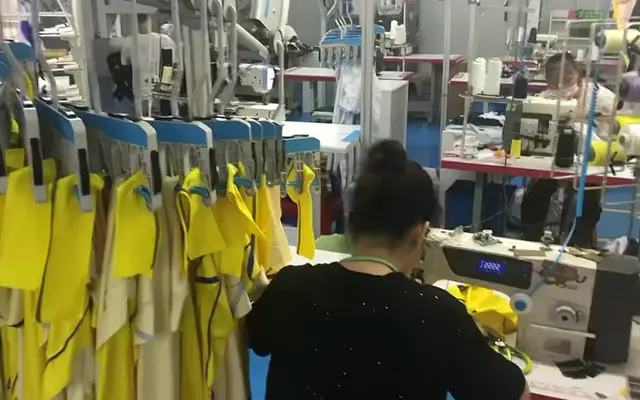
In apparel, OEM (original equipment manufacturing) means the factory produces a garment to the buyer’s design: your sketches, pattern or measurement chart, fabric and construction. ODM (original design manufacturing) means the factory offers a design it has already developed, such as a training short with an existing pattern, fabric and trims, which you adapt and brand. Private label means the goods carry your brand rather than the maker’s. It describes branding, not who developed the product.
Suppliers use the terms loosely. Some say OEM when they mean adding your logo to their stock garment, which is really private label on the factory’s own style. OEM can also be cut, make and trim (CMT), where you supply the fabric, or full package, where the factory buys the materials. Instead of relying on the acronym, ask who supplies the pattern, who sources the materials and who signs off each change.
How do OEM, ODM and private label compare?
OEM gives the most control and differentiation for the most development work; a logo on a stock style gives the least of both; ODM sits in between. Treat the table as typical rather than fixed: minimums, fees and lead times depend on the style, fabric and factory, and changing the fabric, colour and trims of an ODM base moves it towards OEM.
| Factor | OEM: your design | ODM: factory base adapted | Private label on a stock style |
|---|---|---|---|
| Design input | Tech pack, pattern or sample from you | Factory base plus your change list | Factory style; you pick colour and logo |
| Pattern ownership | Negotiated; often yours if paid for | Usually the factory’s unless bought out | The factory’s |
| Typical minimum | Highest; custom fabric and dye lots | Lower when base fabric is reused | Lowest |
| Development rounds | Several: proto, fit, size set, pre-production | Fewer, focused on your changes | Usually one branded sample |
| Exclusivity | Yours if the contract says so | Only if negotiated | None; others can buy the same style |
| Main risk | Gaps in your own specification | Shared design, unrecorded changes | Little to differentiate on |
Who owns the pattern, the design and the brand?
Ownership follows the contract, not the acronym. Before paying development fees, state in writing who owns the pattern, the graded sizes, artwork files and lab-dip references, whether digital pattern files will be released, and whether the factory may sell your version, or the unmodified base, to others. For ODM, ask for exclusivity by market, period or modified feature if differentiation matters.
China’s trade mark system is first-to-file: the first valid applicant owns the mark. The EU’s China IP SME Helpdesk advises planning protection even if you only manufacture in China, and recommends registering the mark in Latin letters, Chinese characters and the logo. It warns that an NDA alone can be insufficient and describes a non-disclosure, non-use and non-circumvention (NNN) agreement, whose non-use terms can bar the factory from making your product, or similar products, for anyone else. It also notes that since the Supreme People’s Court’s 2019 Honda decision, an OEM may face infringement liability for export-only production where someone else holds the mark in China.
A genuinely new garment design can be protected in China by a design patent; the helpdesk says applications usually take around six months, so plan the filing before samples circulate.
Who is legally the manufacturer under a private label?
Usually the brand, whoever designed or sewed the garment. Under the EU General Product Safety Regulation (EU) 2023/988, a manufacturer is anyone who makes a product, or has it designed or manufactured, and markets it under their own name or trade mark. Article 13 applies the manufacturer’s obligations to a business that places a product on the market under its name or trade mark.
Those obligations include an internal risk analysis and technical documentation, a type, batch or serial number, and the manufacturer’s name, trade mark, postal and electronic address. Since 13 December 2024, a product covered by the regulation also needs an economic operator established in the EU who is responsible for it. Choosing ODM does not move these duties to the factory; it only changes who drafted the design.
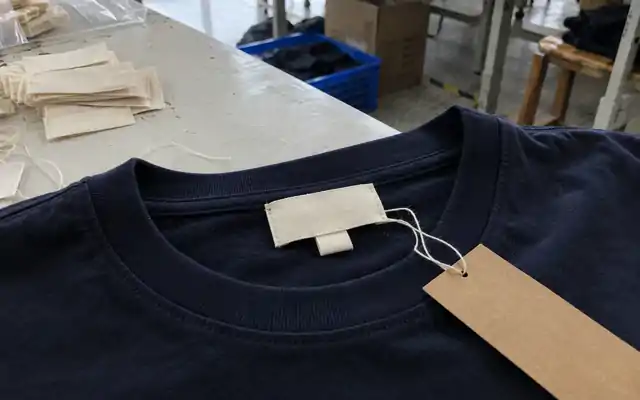
In the US, FTC guidance requires textile labels to show fibre content, country of origin and the identity of a responsible business, by name or by a Registered Identification Number (RN) issued to US businesses. A private-label brand or its US importer commonly appears there, so the label artwork, not the development route, decides whose identity the customer sees.
Which route suits a new activewear brand?
Decide style by style rather than for the whole range. A simple rule: if a style is your differentiator, own its specification; if it is a supporting basic, adapt a proven base. A style that sells on an ODM base often needs exclusive fabric, a refined fit or its own pattern later, so agree at the start how the base can be bought out. These conditions point to each route:
- OEM: you have a technical designer, a fit defined in measurements and a style worth protecting.
- ODM: speed, development cost or a smaller first order matters more than exclusivity.
- Modified ODM: new fabric, colour or trims on a proven pattern, without a full proto cycle.
- Stock style with your logo: testing a brand or channel before committing to development.
How does SenLin handle OEM, ODM and private-label orders?
SenLin works across the spectrum. Standard styles start at 100+ pieces with logo customisation and mixed sizes; standard samples take 3–4 days and production 15 working days. Custom development, to your tech pack or on an adapted base, starts at 300–500+ pieces confirmed by style; custom samples take 3–7 days and production 20–25 working days. Production starts once the order, materials, artwork and sample are confirmed, and transit is quoted separately.
Each quotation includes a costed bill of materials, so fabric, trims, decoration and packaging can be compared line by line. SenLin’s working terms call for ownership of patterns, grading and artwork to be agreed in writing before development starts.
Continue your buyer research
Connect this decision to the relevant product, factory process and frequently asked questions before requesting a quotation.
Frequently asked questions
Is ODM cheaper than OEM?
Usually at the start, because the pattern and fabric already exist and fewer sample rounds are needed. In bulk, unit prices can be similar; the saving lies mainly in development cost, time and minimums. Compare complete quotations with the same fabric, decoration and packaging, and add the cost of buying out the base later if exclusivity will matter.
Can an ODM factory sell my modified design to other brands?
Unless the contract says otherwise, the factory can keep selling its original base, and the line between the base and your changes can be disputed. Define the protected elements, such as your fabric, colourway, graphics or fit changes, and agree exclusivity by market and period. Your trade mark and artwork are protected through registration and the supply agreement, not by the factory’s goodwill.
Do I need a tech pack for an ODM order?
Not a full one, but you need a written change list against the base: fabric, colours with Pantone references, measurements to alter, trims, logo artwork with sizes and positions, labels and packaging. Ask the factory for its base specification so every change is recorded against a fixed starting point. That record becomes the reference for samples and reorders.
Is white label the same as private label?
They overlap. White label usually means a generic product sold by several brands with little change beyond the label; private label means a product sold under one brand’s name, sometimes with exclusive changes. In both cases the business named on the product takes on duties tied to that branding, such as the EU manufacturer obligations, so treat label and packaging artwork as compliance documents.
What does CMT mean, and is it OEM?
CMT stands for cut, make and trim: the buyer supplies the fabric, and often the trims, and pays the factory to cut, sew and finish. It is a form of OEM because the design is the buyer’s, but the buyer also carries the material risk, including shortages, shade lots and fabric defects. Full-package OEM moves sourcing to the factory and makes the costed bill of materials central.
Can I move a style from ODM to OEM later?
Yes, and it is a common progression once a style proves itself. Agree at the outset whether you may buy the base pattern, at what cost, and which files will be released. Without that, moving the style to another factory means re-patterning from a finished garment, which costs development time and risks small fit changes your customers will notice.
Sources and evidence notes
- Official EU regulationEUR-Lex: General Product Safety Regulation (EU) 2023/988
- Official EU guidanceEuropean Commission IP Helpdesk: China IP frequently asked questions
- Official EU guidanceEuropean Commission IP Helpdesk: OEM manufacturing and trade mark infringement in China
- Official US guidanceFTC: US textile and wool labeling requirements